

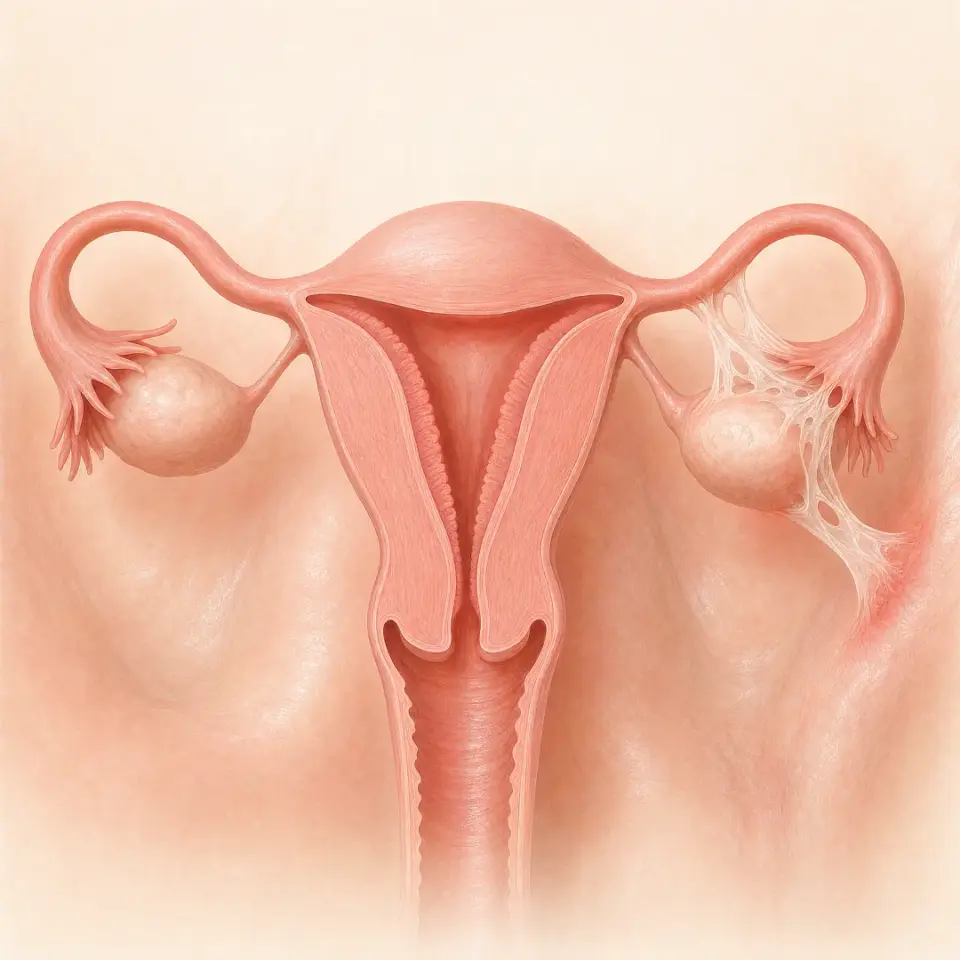
The specialists at the Fertility Institute of Hawaii (Dr. John Frattarelli, Dr. Anatte Karmon, and Dr. Emily Goulet) have evaluated and treated many women in Hawaii and beyond for pelvic adhesive disease, which is often associated with infertility.
Pelvic adhesive disease occurs when scar tissue forms, binding adjacent organs together. Normally, the organs in the abdominal cavity are covered with a smooth, slippery tissue that allows them to glide easily against one another. However, when this tissue becomes damaged or inflamed, scar tissue can develop. This scar tissue can connect two organs, causing them to stick together; the resulting bands are known as adhesions.
Adhesions can significantly contribute to infertility. If they form inside or near the ends of the fallopian tubes, they may block the meeting of egg and sperm. Even if the tubes are only partially blocked, sperm may reach the egg, but the fertilized embryo could become trapped, leading to an ectopic pregnancy. Additionally, adhesions on the ovaries can disrupt ovulation, and adhesions inside the uterus may prevent a fertilized egg from implanting properly.
How is pelvic adhesive disease diagnosed?
Your medical history and a pelvic exam may indicate the presence of pelvic adhesive disease; however, a definitive diagnosis can only be confirmed through a laparoscopy or hysteroscopy.
A laparoscopy is an outpatient surgical procedure in which your doctor uses a narrow fiberoptic telescope, inserted through a small incision near your navel, to examine and potentially remove adhesions in your pelvic cavity.
A hysteroscopy is also an outpatient procedure, during which your doctor inserts a narrow fiberoptic telescope into your uterus through the cervix to look for and, if necessary, remove adhesions inside the uterus.