


The Fertility Institute of Hawaii in Honolulu is one of only a few centers in Hawaii that can perform a comprehensive male infertility evaluation.
The sperm’s ability to fertilize an egg

Several factors determine whether a man’s sperm can fertilize an egg. Semen quality and quantity may affect sperm’s ability to fertilize an egg. Sperm motility, the ability of sperm to move, appears to be one of the most important factors in determining sperm’s fertilizing capability. Even with a low sperm count, men with highly motile sperm may still be fertile. Sperm shape, or morphology, may also affect its ability to fertilize an egg. In addition, the sperm must live long enough to reach the egg, a characteristic known as viability.
Semen Analysis Testing: A semen analysis helps determine how sperm will reach the egg. Options for sperm delivery include appropriately timed intercourse, intrauterine insemination, in vitro fertilization (IVF), and IVF with ICSI (intracytoplasmic sperm injection).
Infectious Disease Screening: (HIV, syphilis, hepatitis) With these diseases, you may be infected but asymptomatic for long periods of time. All of these can be passed along through the semen. The chance of transmission after sperm washing for IUI or IVF is very low.
Genetic Carrier Screening: ACOG recommends that DNA screening for cystic fibrosis and other genetic diseases be available to all couples seeking preconception or prenatal care.
- Karyotype: This test evaluates chromosomes. In some conditions, the rate of chromosomal abnormalities is increased. Finding a chromosomal abnormality would mean that the sperm of that individual would not be used.
- Y-Deletions Testing: In some men with very low sperm counts, the problem is due to structural abnormalities in the segment of the Y-chromosome that controls sperm development. Pregnancy can occur (via IVF with ICSI), but these abnormalities can be passed on to any male children.
- Cystic Fibrosis: ACOG recommended that OB-GYNs make DNA screening for cystic fibrosis available to all couples seeking preconception or prenatal care- not just those with a personal family history of carrying the CF gene, as previously recommended.
Semen Analysis
Semen Analysis Testing: Infertility may be caused by many things. Most studies suggest that sperm abnormalities in males account for about 40% of all infertility, while couples with problems with both partners account for another 20%. The basic test to evaluate male fertility is the Semen Analysis.
The purpose of the semen analysis is to:
- Evaluate the seminal plasma for abnormalities in its density, volume, and biochemical characteristics
- Examine sperm under the microscope for abnormalities in number, shape, and movement. Based on the semen analysis results, we may recommend further evaluation and/or therapy.
How to Schedule a Semen Analysis
Note: A physician’s order or consult with a Fertility Institute of Hawaii is needed prior to scheduling.
- Call the office 808-545-2800 or text 808-855-6932 to schedule the semen analysis.
- An appointment is required so we can evaluate the specimen appropriately and in a timely manner.
- If you cannot make the appointment, please call the office to cancel so we can schedule another patient.
- All specimens should be produced by masturbation. Never use over-the-counter condoms meant for contraception: they are toxic to sperm. If collection is by other than masturbation, you will be given a special sterile condom by our office, along with special directions on how to use it.
Specimen Collection Instructions
- Refrain from any sexual activity that would result in ejaculation of semen for at least 2 days, but not longer than 7 days prior to the specimen collection.
- The specimen will be collected by masturbation in a private room in our office or at home.
- You will be provided a sterile container from the laboratory
- Do not use lubricants (except mineral oil) because they can harm sperm.
- Wash your hands before producing the specimen to minimize the risk of contamination.
- Remove the lid from the container.
- Produce the specimen.
- Avoid touching the inside of the container with your fingers or penis.
- Replace the lid immediately after completing the collection.
- Interrupted intercourse is not an acceptable method of collection for infertility purposes.
- Please deliver your sample directly to a lab representative.
Home Collections
Please follow the instructions below for home collections:
- Obtain a sterile collection container from the office.
- This specimen should also be produced by masturbation.
- Follow the collection instructions above.
- Make sure the specimen is properly labeled.
- The specimen should be delivered to the laboratory within one hour of ejaculation.
- Keep the specimen at body temperature (carry it upright in an inside pocket, close to the body).
- DO NOT refrigerate the specimen or place it in hot water.
- If there are problems with the collection, please let the lab personnel know, as this will aid in interpretation of the specimen.
Interpreting the Results of the Semen Analysis
At its most basic level, the infertility work-up is trying to determine which is the optimal method to deliver the sperm to the egg. There are 4 ways to deliver the sperm to the egg: (1) intercourse, (2) artificial insemination, (3) in vitro fertilization (IVF), and (4) IVF using intracytoplasmic sperm injection (ICSI).
The semen analysis results are interpreted in the context of the couple’s overall evaluation to provide the most efficient and effective sperm delivery option for the situation.
Semen Analysis Normal Values
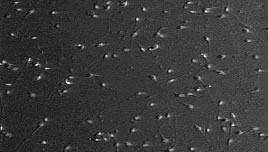
| Volume:2.0-5.0 cc | If the volume is too small, there may not be enough to reach the cervix; if it is too large, it may dilute the sperm. |
| Concentration:>20 million/cc | Sperm concentrations may vary widely from within the same individual. Among the factors that can affect the concentration are frequency of ejaculation, environmental factors, surgery/trauma, heat, and ingestibles (drugs, alcohol, recreational drugs). About 20-25% of fertile men actually have counts below 20 million. |
| Motility:50% | This is the proportion of sperm that are swimming. They may swim very fast, moderately fast, or slowly. The sperm may also wiggle in place or not move at all. |
| Morphology: | The overall appearance of the sperm. The normal range of morphology depends on the laboratory analysis. Please consult with your physician concerning the result. |
| White Blood Cells:< 1 million/cc | The presence of WBCs suggests an ongoing inflammatory process in the male reproductive tract. They can secrete factors that inhibit a sperm’s ability to move and fertilize an egg. White blood cells may indicate infection, which can be treated with antibiotics. |
Negative Environmental Factors and Sperm Function
Men have the benefit of being able to continuously produce sperm (in contrast to a woman being limited to approximately the 500,000 oocytes that she is born with). This allows men to make behavioral changes that might improve sperm quality. A variety of chemicals are used by men that can adversely affect sperm production and/or function. These include alcohol, marijuana, cocaine, cigarette smoke, and narcotics. For the occasional user of these substances, stopping their use can result in improved semen parameters in 3-6 months for some men.
However, long-term use can result in permanent impairment. A number of drugs also contribute to problems with sperm. These include calcium channel blockers (anti-hypertensives, see list below), cimetidine, spironolactone, nitrofurantoin, sulfasalazine, erythromycin, tetracycline, and anabolic steroids. Other drugs that can be problematic include chromium picolinate, DHEA, androstenedione, colchicine, and methotrexate. Calcium channel blockers are particularly important to know about, as the sperm can appear normal but not be able to fertilize an egg because of changes induced in the sperm cell membrane by the medicine.
Chemical exposures by other means can affect sperm production/function. These include heavy metals (lead, mercury, boron), organic solvents (acetone, ethylene glycol, benzene, toluene, etc.), and pesticides (dibromochloropropane, ethylene dibromide, carbaryl, chlordecone). Other physical factors that have been associated with sperm abnormalities or reduced fertility include heat, vibration (truck driving, bike riding), electromagnetic fields, and microwave radiation. Therapeutic interventions might include the use of artificial insemination, donor insemination, in vitro fertilization, or intracytoplasmic sperm injection with IVF.
Calcium Channel Blockers
If you are on one of these drugs, it is important to tell your doctor and nurse. Calcium channel blockers can alter the sperm cell membrane so that they cannot fertilize an egg, despite being normal in every other way. If you are not sure about one of your medications, please ask your doctor or nurse.
| Generic Name | Brand Name |
| Amlodipine | Norvasc |
| Bepridil | Vascor |
| Diltiazem | Cardizem, Tiazac |
| Felodipine | Plendil |
| Nicardipine | Cardene |
| Nifedipine | Adalat, Procardia |
| Nimodipine | Nimotop |
| Nisoldipine | Sular |
| Verapamil | Calan, Covera, Isoptin, Verelan |